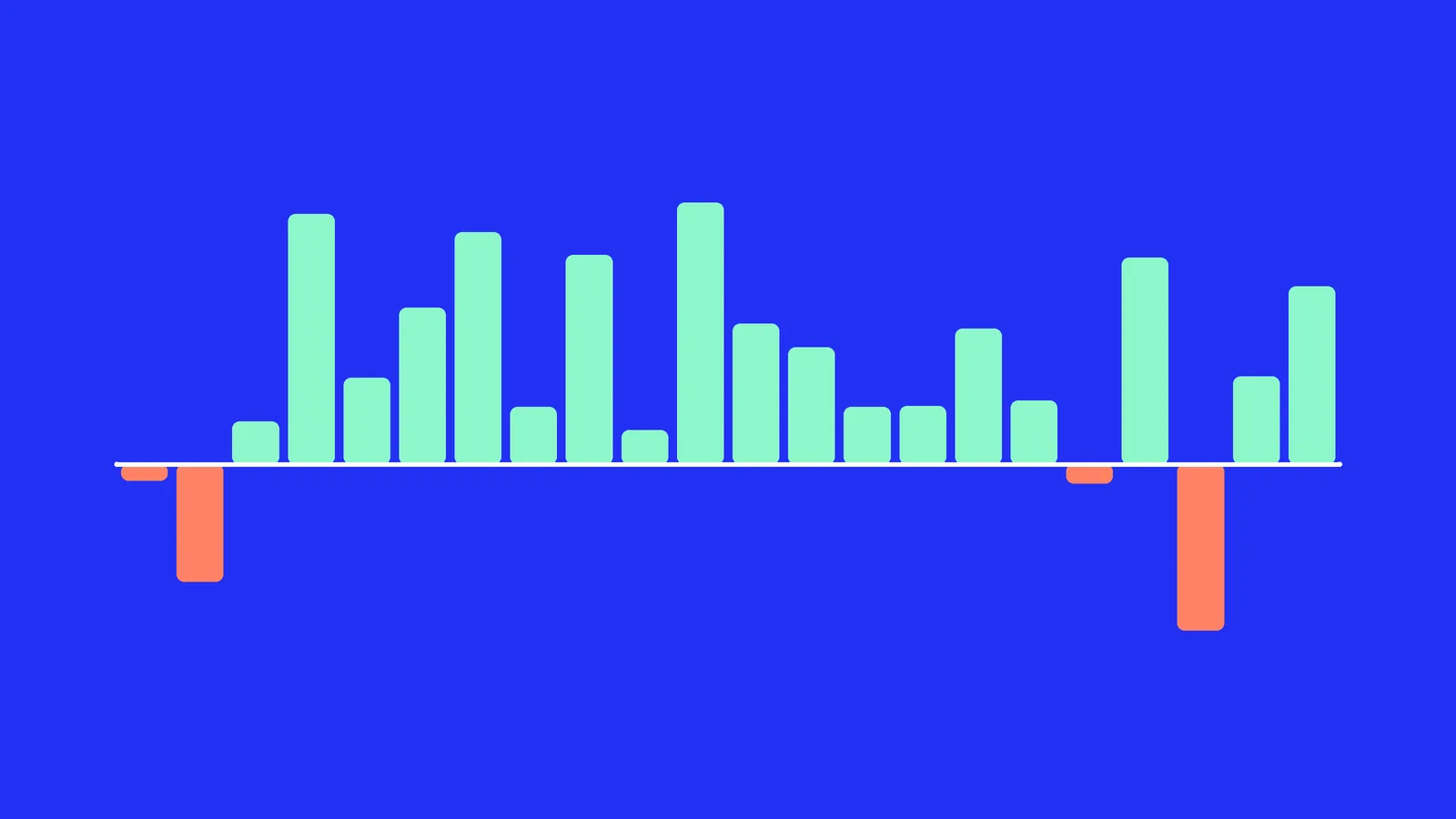
Bitcoin ETF flows measure the net amount of money that entered or left spot Bitcoin exchange-traded funds on a given day. An inflow means new shares were created and the fund added Bitcoin to back them. An outflow means shares were redeemed and the fund's holdings shrank. Flows show demand through one channel, with a delay, and do not on their own explain or forecast the Bitcoin price.
What a spot ETF is
An exchange-traded fund is a fund whose shares trade on a stock exchange like ordinary shares. A spot Bitcoin ETF holds actual Bitcoin, so each share represents a small claim on the coins in the fund. Spot Bitcoin ETFs began trading in the United States in January 2024. Spot funds also exist for Ether and Solana.
Investors use them to get price exposure through a normal brokerage account, without holding the coins themselves.
How shares are created and redeemed
The number of shares in an ETF is not fixed. Large financial firms called authorised participants can create new shares or redeem existing ones directly with the fund.
- Creation. When demand pushes the share price above the value of the fund's holdings, an authorised participant delivers cash or Bitcoin to the fund and receives new shares.
- Redemption. When the share price falls below the value of the holdings, the participant returns shares and receives cash or Bitcoin.
This process keeps the share price close to the net asset value (NAV), which is the value of the fund's holdings per share. It is also what produces flows.
How flows are calculated
Daily net flow = (shares outstanding today − shares outstanding yesterday) × NAV per share
Example with round numbers, not a real fund: a fund has 100 million shares and a NAV of $50 per share. The next day it has 101 million shares.
Net flow = 1 million × $50 = +$50 million
The day after, the count drops to 100.4 million shares at the same NAV.
Net flow = −0.6 million × $50 = −$30 million
To get a figure for the whole market, add up the funds. In this example, Fund A at +$50 million, Fund B at −$20 million and Fund C at +$5 million give a combined net inflow of $35 million.
Flows, assets and volume are different things
These three figures are often mixed up.
- Flows come only from shares being created or redeemed.
- Assets under management change with flows and with the price. Example: a fund holds $5 billion of Bitcoin, the price rises 10% and nobody creates or redeems a share. Assets are now $5.5 billion and the flow is zero.
- Trading volume counts shares changing hands between investors on the exchange. A day of heavy volume can have a flow close to zero, because every share purchased was sold by another investor.
How to use it in CryptoPith
The ETF Flow Tracker is a planned tool and is not available yet. No launch date has been set. When it is released, it will work like this:
- The tracker will show daily flows for spot Bitcoin, Ethereum and Solana ETFs.
- Each day's figures will come with a short AI summary in plain words.
- As with every figure in CryptoPith, the data source and the time it was checked will be shown.
- The summary will describe what happened. It will not say "buy" or "sell", in line with the rest of the product.
Common mistakes and limits
- Reading flows as a price forecast. A day of inflows describes what investors in these funds did. It does not say what the price will do next.
- Forgetting the delay. Flow figures are published after the trading day ends, and complete numbers are often available only the next day. The market has already seen the price action that went with them.
- Assuming every inflow is a bet on a rising price. Some investors hold ETF shares against an opposite position in futures to earn the difference between the two prices. That shows up as an inflow without being a view on direction.
- Treating ETFs as the whole market. Bitcoin also trades on crypto exchanges and privately between large holders. ETF flows are one channel among several.
- Comparing one day in isolation. Single days are noisy. A run of days, or a weekly total, says more.
- Ignoring trading hours. ETFs trade only when stock exchanges are open. Bitcoin trades all week, so weekend moves appear in ETF data only on the next trading day.
This article is educational and is not financial advice.
FAQ
What is a spot Bitcoin ETF?
It is an exchange-traded fund that holds actual Bitcoin and issues shares that trade on a stock exchange. The share price follows the Bitcoin price, less the fund's fees. Holding a share is not the same as holding the coins directly.
Do ETF inflows make the Bitcoin price go up?
An inflow means a fund added Bitcoin to back new shares, which is demand. The price depends on everyone trading Bitcoin, not only ETF investors, and there have been days with inflows and a falling price. Flows are one input among many.
What is the difference between ETF flows and ETF volume?
Volume is how many shares were traded between investors. Flow is how much money entered or left the fund through newly created or redeemed shares. High volume with a small flow is common.
When are ETF flow figures published?
They become available after the trading day closes, and a complete picture across all funds often arrives the following day. Figures can differ slightly between sources and are sometimes revised.
Related tools: Exchange flow context, Stablecoin flow monitor and Daily market brief. Your first AI report in CryptoPith is free.