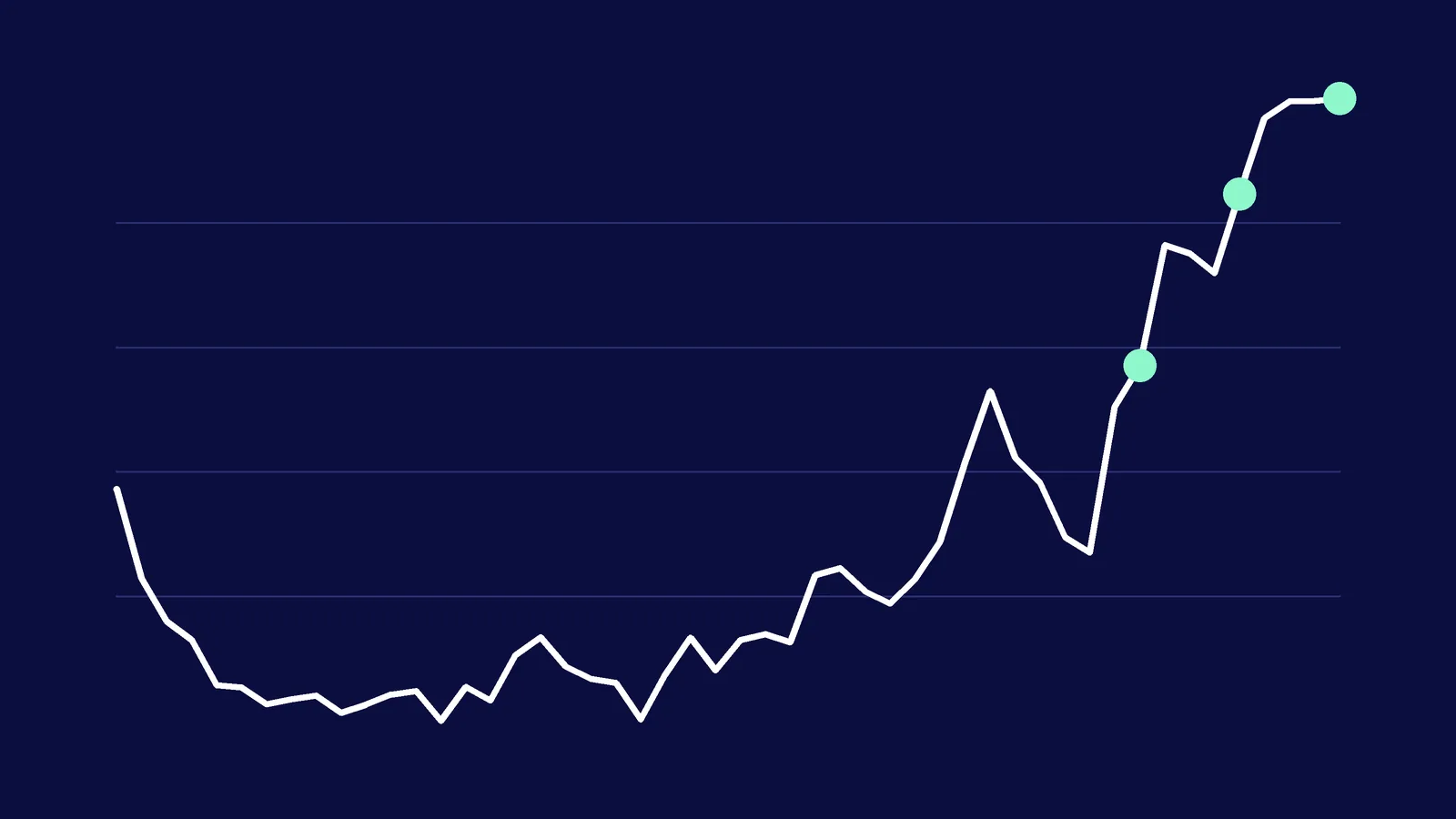
When Bitcoin makes a sharp move, the honest answer to "why" has two parts: what can be verified, with a time and a source, and what is only a possible explanation. Sometimes a dated event clearly lines up with the move. Often there is no clear cause at all. Why Is It Moving? in CryptoPith lists verified facts and hypotheses separately, and says "no clear cause found" when that is the truth.
What usually moves crypto prices
Sharp moves tend to come from a small number of sources.
Scheduled economic data. Inflation figures, central bank decisions and jobs reports are published at known times. Crypto often reacts along with other markets.
News about a coin or the industry. Regulatory decisions, court rulings, exchange incidents, network upgrades and security breaches.
Derivatives positioning. When many traders use leverage in the same direction, a modest price move can force some positions to close. Those forced closures, called liquidations, push the price further and can trigger more of the same.
Large transfers and flows. Big movements of coins to or from exchanges, or large changes in stablecoin supply. A transfer is a fact. What its owner intends is not known.
Thin trading. At quiet hours there are fewer orders in the market, so a single large order moves the price more than usual.
No identifiable cause. Markets are made of many participants acting for their own reasons. A move can simply be the sum of ordinary trading.
Facts and hypotheses are different things
A fact is something that happened and can be checked: an announcement published at a stated time, a recorded volume of liquidations, a transfer visible on a blockchain.
A hypothesis is a proposed link between a fact and the price move: "the price fell because of the announcement".
The gap between the two is where most bad explanations live. Headlines written after a move usually pick one event and present it as the reason. The event was real. The link is a guess.
A worked example
Everything below is invented to show the format. It is not a real event.
Coin X falls 6% between 14:00 and 15:00 UTC.
Verified facts:
- An inflation report was published at 14:30 UTC. Source: the official statistics release.
- Liquidations of long positions in Coin X futures were higher in that hour than in the hours before. Source: exchange data, checked at 15:05 UTC.
Hypotheses:
- The inflation report changed interest rate expectations and traders reduced risk.
- The first drop forced leveraged long positions to close, which deepened the fall.
Now look at the timing. If the price began falling at 14:05, before the report came out, the first hypothesis is weaker than it looks. The facts stay true either way. The explanation built on them is what changes.
Correlation is not cause
Two things that happen close together are correlated in time. That is a reason to look closer. It is not proof that one caused the other.
Some simple tests help:
- Order. Did the event come before the move? If the price moved first, the event did not cause it.
- Breadth. Did other coins and other markets move too? A market-wide move points away from coin-specific news.
- Size. Is the event big enough to explain the move? Minor news rarely explains a large swing.
- Alternatives. Is there another event in the same window that fits just as well?
Even when all four tests pass, the result is a well-supported hypothesis. Certainty is rare.
How to use it in CryptoPith
- Open Why is it moving? The top 10 coins are free. All other coins are available on the Pro plan.
- Choose the coin that has made a sharp move.
- Read the verified facts. Each one has a time and a source.
- Read the hypotheses, which are listed separately from the facts.
- Compare the times of the facts with the time of the move.
- If the tool says "no clear cause found", take that as the answer. It means no verified fact explains the move.
Common mistakes and limits
Accepting the first headline. News sites need a reason for every move and will supply one. Check whether the stated cause came before the move and whether it has a source.
Treating a hypothesis as a fact. The tool lists them apart for a reason. A hypothesis that sounds convincing is still a hypothesis.
Forgetting that correlation is not cause. This is the main limit of any explanation of a price move. Timing can support a link. It cannot prove one.
Expecting an answer every time. Many moves have no clear cause. "No clear cause found" is a real result, and it is more useful than an invented story.
Reading an explanation as a forecast. Knowing why a price moved, even with confidence, says nothing certain about what it does next.
Reading intent into transfers. A large transfer to an exchange is a fact. It is not evidence that the coins were sold.
This article is educational and is not financial advice. CryptoPith is an analysis and education product and gives no trading signals.
FAQ
Why is Bitcoin going up today?
The answer changes daily, and on many days there is no single confirmed reason. Look for dated, sourced facts that came before the move, and treat any link between them and the price as a hypothesis.
Why is Ethereum down today?
Check whether the whole market is down or only Ethereum. A market-wide fall points to broad factors such as economic data or derivatives liquidations. An Ethereum-only move points to news specific to that network.
Why does crypto move when there is no news?
Prices reflect many participants acting at once. Thin trading, leveraged positions closing and ordinary order flow can move a price without any event behind it.
Is the explanation in the tool always certain?
No. Facts are verified and sourced, but the link between a fact and a price move is listed as a hypothesis. When nothing fits, the tool says that no clear cause was found.
Related tools
For a wider view of the day, see the Daily market brief. For leverage and liquidations, open the Derivatives pulse, and for scheduled releases see the Macro and crypto event calendar. Your first AI report in CryptoPith is free.