You can track a crypto portfolio without connecting a wallet by typing your holdings in by hand: the coin, the amount and the price you paid. The tracker then works out the value, the unrealised profit and loss and how concentrated the portfolio is. Nothing is linked, so no keys, addresses or exchange permissions are shared.
This article is educational and is not financial advice.
Why track by hand
Many trackers fill themselves in. They ask for a public wallet address or for an API key from an exchange, and then read your balances. That is convenient, and it has a cost. A wallet address reveals your whole transaction history to whoever holds it. An API key is a credential that has to be stored somewhere and can be misconfigured.
Manual entry turns that trade around. You give up automatic updates and keep your privacy. The tracker knows only what you type, and a mistake in it cannot touch real funds, because the portfolio is virtual.
The three numbers that matter
Value. For each coin, multiply the amount by the current price. Add the results.
holding value   = amount × current price
portfolio value = sum of all holding values
Unrealised profit and loss. This is what you would gain or lose if you closed the position at the current price. It is called unrealised because the position is still open. It becomes realised only when you actually close it.
unrealised P&L     = (current price - average cost) × amount
unrealised P&L (%) = unrealised P&L / (average cost × amount) × 100
If you bought the same coin several times, the average cost is the total you paid divided by the total amount you received.
Concentration. This is the share of the portfolio that sits in one holding.
concentration = holding value / portfolio value × 100
A worked example
All prices here are examples with round numbers, not quotes.
| Coin | Amount | Average cost | Example price | Value | Unrealised P&L |
|---|---|---|---|---|---|
| Coin A | 0.5 | $40,000 | $50,000 | $25,000 | +$5,000 |
| Coin B | 10 | $2,000 | $1,800 | $18,000 | -$2,000 |
| Coin C | 1,000 | $5 | $7 | $7,000 | +$2,000 |
The portfolio value is 25,000 + 18,000 + 7,000 = $50,000. The total cost was 20,000 + 20,000 + 5,000 = $45,000. Unrealised profit is $5,000, which is 5,000 / 45,000 = 11.1%.
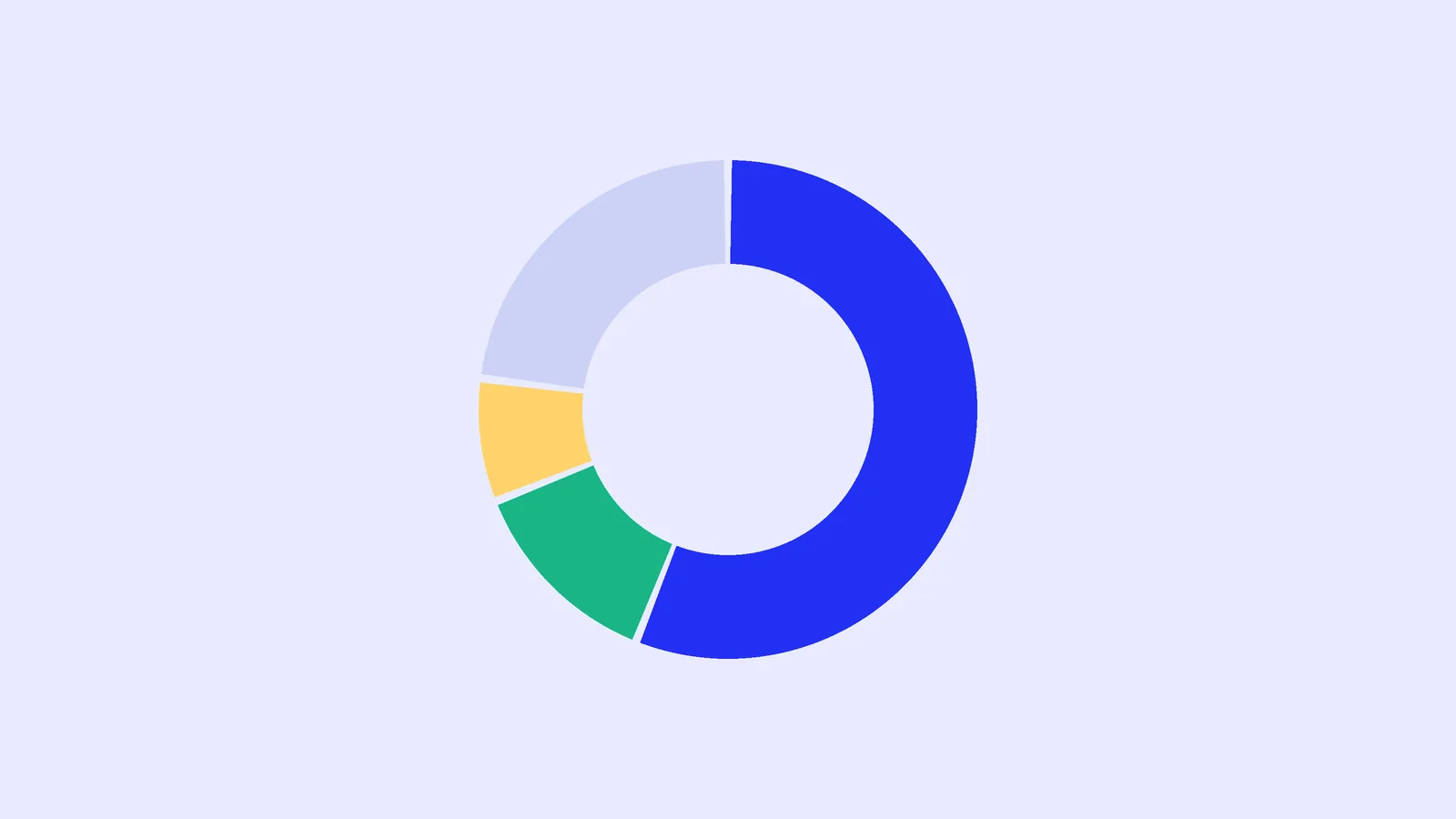
Concentration is 50% in Coin A, 36% in Coin B and 14% in Coin C. Half of the portfolio depends on one coin. If Coin A fell by 20% and nothing else changed, the whole portfolio would lose 10%.
Concentration is more than one number
Three coins do not always mean three separate risks. Coins often rise and fall together. If the three holdings above tend to move in the same direction on the same days, the portfolio behaves more like one position than like three. Concentration by value shows where the money is. Correlation shows whether spreading it actually changed anything.
How to use it in CryptoPith
- Type in each holding by hand: the coin, the amount and what you paid.
- Read the portfolio value and the unrealised profit and loss.
- Check concentration to see how much of the total sits in each holding.
- Read the AI risk summary, which describes the risks of the portfolio in words.
- Update the entries by hand when your real holdings change.
Portfolio Intelligence is virtual only. It does not connect to a wallet or an exchange, it holds no funds and it places no trades. The basic version is part of Pro ($14 a month) and above, and the advanced version is part of Premium ($34 a month) and Elite.
Common mistakes and limits
- Letting entries go stale. A manual tracker is only as current as your last update. If you traded and did not edit the entry, every number after it is wrong.
- Leaving out fees. If fees are not part of the cost you enter, the profit shown is higher than the real one.
- Treating unrealised profit as money in hand. It changes with every price move and exists only on paper until the position is closed. Tax is a separate question that this article does not cover.
- Reading concentration alone. A portfolio spread across ten coins that move together is less diversified than it looks.
- Reading the risk summary as instructions. It describes the portfolio. It does not tell you to buy, sell or rebalance.
- Forgetting holdings elsewhere. The tracker sees only what you typed in. Coins you did not enter are not part of the picture.
FAQ
Is it safe to connect a wallet to a portfolio tracker?
It depends on the service and on what you share. A public address cannot move funds, but it exposes your balances and history. An exchange API key should be read-only at most. CryptoPith avoids the question by asking for neither.
How do I calculate unrealised profit in crypto?
Subtract your average cost from the current price and multiply by the amount you hold. For 10 coins bought at $2,000 and priced at $1,800 (example), the result is (1,800 - 2,000) × 10 = -$2,000.
How do I track crypto without linking an exchange?
Enter each holding by hand with its amount and cost. The tracker calculates value and profit from market prices. You need to edit the entries yourself whenever you trade.
Does CryptoPith hold my coins?
No. CryptoPith is analysis and education only. It has no custody, no deposits and no trading, and the portfolio is a virtual list of what you typed in.
Related tools: Correlation matrix, Portfolio stress test and Crypto profit calculator. Your first AI report in CryptoPith is free.